

While most SaaS companies allocate 8% of their revenue to marketing (with growth-stage firms spending up to 40-50% on combined sales and marketing), the smartest embedded finance players are taking a radically different approach.
So, this week I zoomed into 3 of the biggest embedded finance providers: Stripe, Wise and Brex.
I went to see what they did - and still are doing - in their growth strategies and how you can learn from them. I also give you some tips on marketing tools to help you on your content strategy and growth.
Why Traditional Paid Acquisition Fails for Fintech Infrastructure
The strategic reality:
In most SaaS, you can run ads showing a slick product demo and convert users in days. Embedded finance doesn’t work that way.
Four reasons paid acquisition economics break down:
1. The trust barrier: Decision-makers won’t integrate financial APIs based on a carousel ad. They’re connecting your code to their customers’ bank accounts. The evaluation process involves security reviews, compliance checks, and technical deep dives that can’t be shortcut with retargeting pixels.
2. The education gap: Most potential customers don’t even know what “banking-as-a-service” or “payment orchestration” means yet. They’re searching for explanations. You need to create the category before you can sell in it.
3. The compliance constraint: Consumer fintech companies face strict advertising regulations. You can’t make bold claims about returns, guaranteed approval rates, or financial success. B2B fintech has more flexibility, but you still can’t use the aggressive tactics that work for traditional SaaS.
4. The long sales cycle: When evaluation periods run 6-12 months with multiple stakeholders (engineering, security, compliance, finance), paid acquisition economics become brutal. Your cost per click compounds over months of nurturing before a deal closes.
Real life example
Stripe understood this early on: back in 2011, their homepage contained just 300 words.
They clearly defined the target audience, outlined their pain points, and even featured working code developers could copy and run using a live API key. For the entire first year, Stripe’s only paid marketing channel was Stack Overflow ads; everything else revolved around documentation, developer tools, and educational content.
The strategy paid off.
By 2024, Stripe’s total payment volume surged 38% to $1.4 trillion, with the company now powering payments for half of the Fortune 100.
Strategic Keyword Research for Emerging Fintech Categories
The challenge in fintech isn’t finding high-volume keywords—it’s identifying the terms that will matter in 6-12 months when buyers are ready.
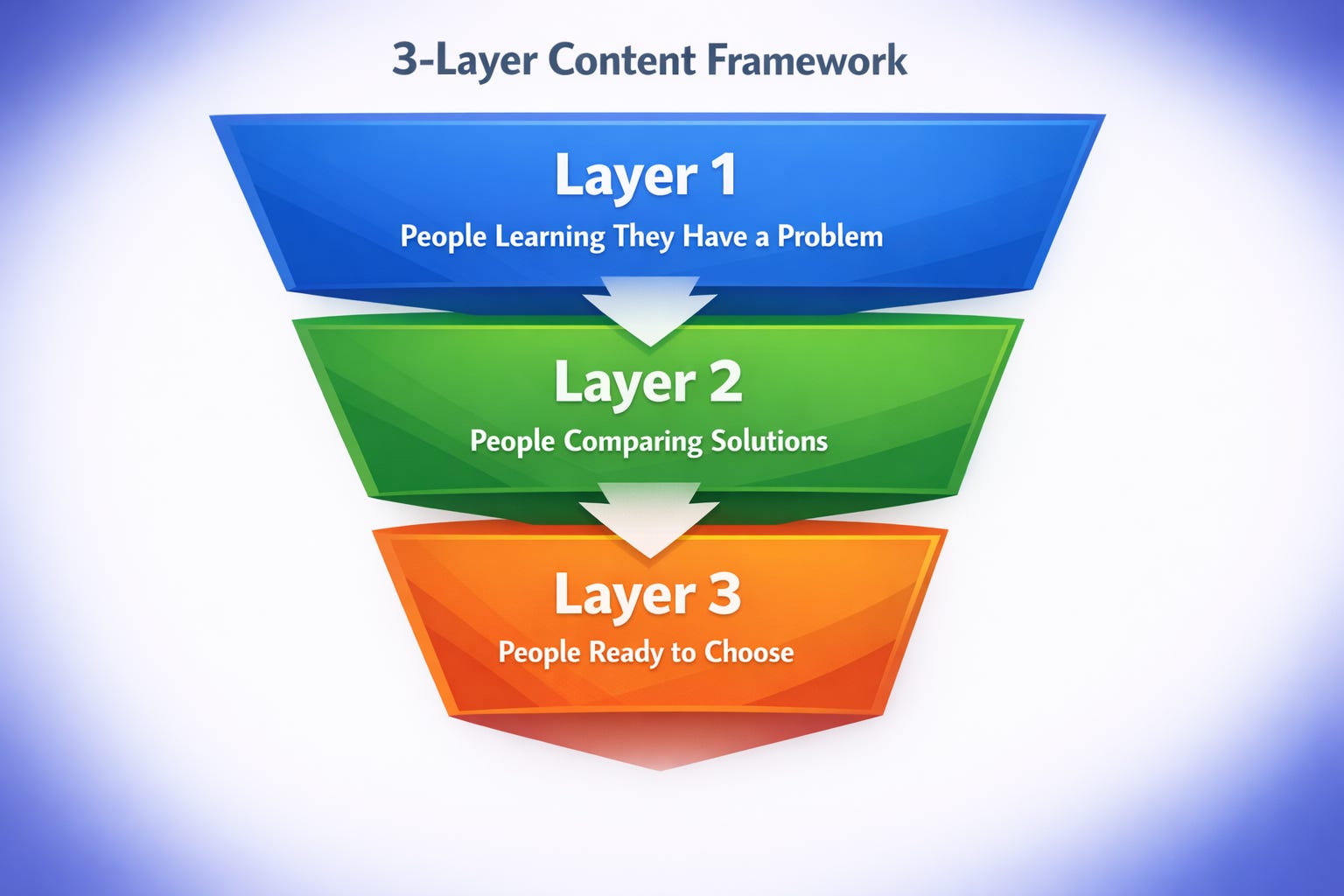
Layer 1: People Learning They Have a Problem
Early-stage searches where someone feels the pain but doesn’t know what solution they need yet.
Examples:
“why payments fail in marketplaces”
“how to reduce chargebacks”
“embedded finance problems for SaaS”
This layer usually has higher search volume, but lower intent. It’s where awareness starts.
Layer 2: People Comparing Solutions
Mid-funnel searches where buyers understand the space and are exploring options.
Examples:
“how embedded banking works”
“payment processing for two-sided marketplaces”
This is where you build trust and authority while capturing serious interest.
Layer 3: People Ready to Choose
High-intent searches where buyers are actively evaluating vendors and pricing.
Examples:
“best banking API for SaaS”
“payment gateway comparison for marketplaces”
“embedded finance platform pricing”
Lower volume, but high conversion. This is where the money is.
Real life example
Brex organized their content into product-aligned subfolders targeting mid- and bottom-funnel searchers. Their “Spend Trends” subfolder launched in August 2024 grew to 137 articles attracting 34,000+ monthly visits with traffic value exceeding $280,000—in just 8 months. They published at 17 posts per month, systematically covering their category.
The strategic insight: Brex didn’t wait for keyword volume data. They identified what their target customers (CFOs, finance teams) needed to know and created comprehensive coverage before competitors realized these topics mattered.
Tool integration point: Tools like Ahrefs and Semrush can show you competitor gaps, but for emerging fintech categories, you need to reverse-engineer what your best customers searched before finding you. Interview closed-won deals and ask: “What were you Googling 6 months before you signed?”
Content Formats That Rank AND Convert in Financial Services
The format that works: Explainer + Implementation
You need to both educate the market (why this matters) and enable evaluation (how it works). This is where fintech content differs from traditional SaaS—you can’t just optimize for clicks. The content needs technical depth to convert qualified leads.
Format 1: Technical Docs as SEO (Stripe Model)
Stripe’s documentation doubles as their top marketing asset, pulling millions in monthly visits with a dev-friendly three-column layout.
Testable APIs slash sales cycles
Full coverage (guides → edge cases → compliance) builds unbreakable trust
Every pattern ranks anew—no marketing/doc split
Pro Tip: Semrush or Surfer SEO can map your API docs to high-volume dev queries, ensuring topical authority without keyword stuffing.
Format 2: Smart Comparisons (Wise Model)
Wise ranks #1 for “dollars to pounds” via transparent comparisons + calculators—no bashing, just helpful breakdowns.
Grew organic traffic from 7.7M to 16M+ monthly
Confidence in product + clear use cases = natural conversions
Pro Tip: Ahrefs shines here—spot competitor gaps, track rankings, and build interactive tools that dominate high-intent searches.
Format 3: Educational Hubs (Brex Model)
Brex’s “Spend Trends” hub (137 articles) hit 34K+ monthly visits and $280K traffic value in 8 months via relentless subfolder strategy.
17 posts/month + internal links = Google authority
Mid/bottom-funnel focus guides every buyer persona
Pro Tip: Clearscope ensures technical accuracy across hubs, while Semrush forecasts traffic value pre-publish.
Tool integration point: Content optimization tools like Clearscope and Surfer SEO help fintech companies hit keyword targets while maintaining the technical depth compliance teams require. You can’t just stuff keywords into fluffy content about payments—the technical accuracy matters for conversion, not just ranking.
Teaser for Next Week’s issue:
Next week: How Wise built thousands of landing pages to scale from 7.7M to 16M organic visits. How Revolut captures competitor traffic worth millions. And why traditional SEO metrics (rankings, traffic, bounce rate) completely miss the point for fintech growth.
What do you think? Have you tried any of these content strategies for your fintech? Or are you still figuring out how to break into search results without burning your budget on ads?
Hit reply and let me know what’s working (or not working) for you. I read every response.
And if you found this helpful, forward it to a founder or marketer who’s trying to crack fintech growth. They’ll thank you.
Want to work together? Reach out at thefintechwrite.com