

Traffic used to mean reach. Reach used to mean growth.
Not anymore.
The State of Search Q1 2025 report from Datos and SparkToro shows the change in numbers: almost 60 percent of Google searches in the US and Europe end without a click. Users still search, but they’re not leaving the page. They get their answers from Google’s own widgets or from AI assistants like ChatGPT and Copilot.
That single shift reshapes how fintechs grow.
Search is no longer a funnel that sends people to your website. It’s a filter that decides who gets seen at all.
Traditional search still dominates in volume, but Datos’ data shows its share eroding quarter by quarter. AI tools remain small in relative size—under one percent of total search events—but their growth curve is steep and consistent. This isn’t a flash trend. It’s a structural change in how people find information.
And that change cuts right through fintech.
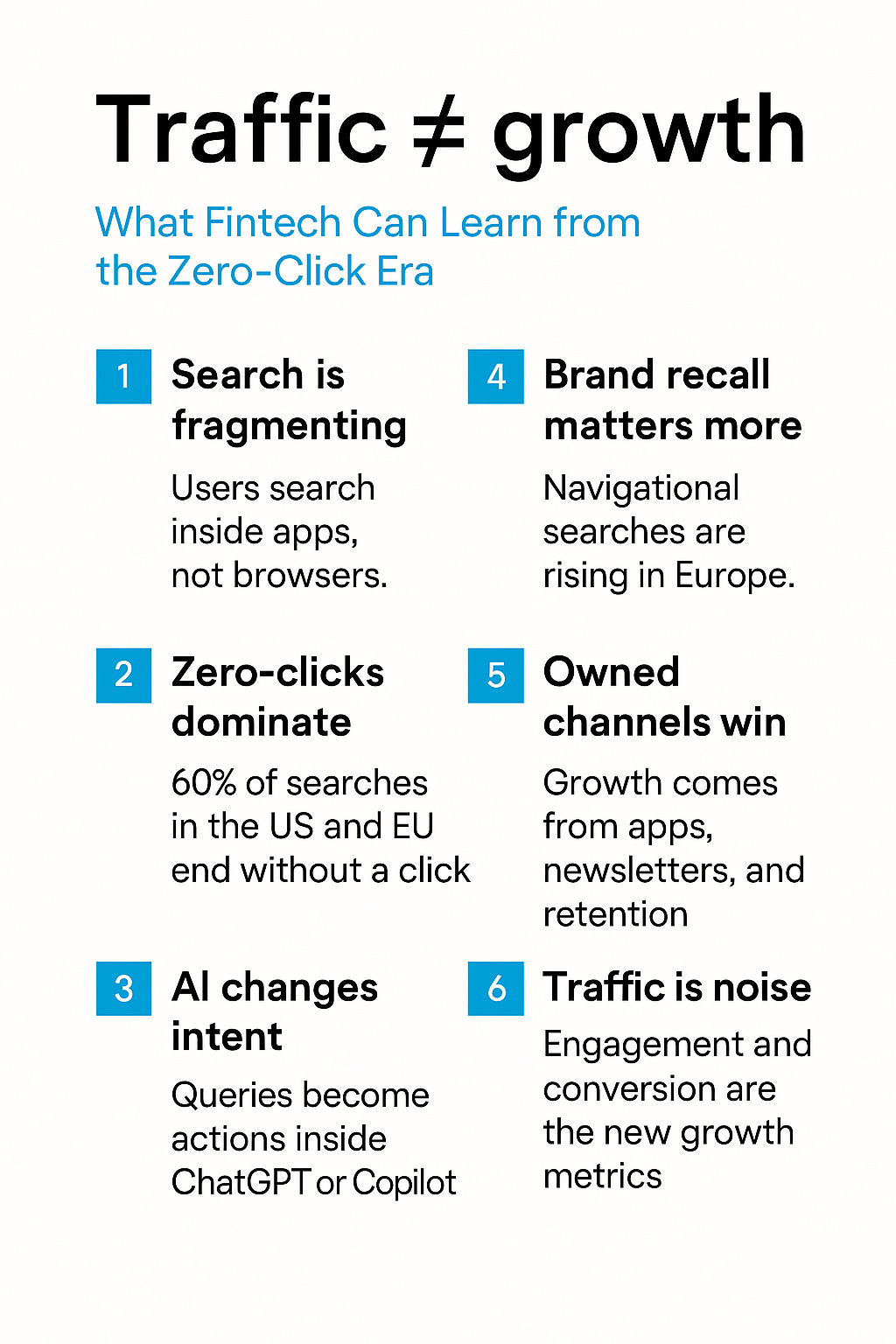
For years, visibility meant traffic spikes, SEO wins, and content pipelines. Today, most fintech discovery happens inside closed ecosystems. People check exchange rates in Revolut, send money in Wise, compare credit cards in Apple Pay, and look for advice in Reddit threads. Discovery is happening inside the product, not on Google.
Your website isn’t the starting point anymore.
The problem isn’t visibility. It’s attribution.
Zero-click searches mean users see your information but never visit you. Google shows them the exchange rate, loan calculator, or crypto price you once used to attract traffic. You still provide value, but Google keeps the user.
And when traffic does show up, it’s not always the right kind.
That’s why the new Growth Unhinged report by Kyle Poyar caught my attention. He found that marketers are investing in AI search faster than anywhere else, calling it their fastest-growing source of high-intent leads.
Webflow is a perfect case study. The scale-up now gets 10 percent of its sign-ups from AI discovery, growing four-times year-on-year. Ninety-one percent of that comes from ChatGPT, and those users convert six times higher than Google traffic—most within a week.
Webflow’s VP of Growth said it best: aggregate traffic is totally misleading without a quality metric.
That’s the lesson for fintech too.
AI discovery and in-app journeys won’t flood you with visits, but they’ll bring people who are ready to act. A referral from an AI model or a mention inside an app can be worth more than a thousand casual visitors. Growth now depends on being recommended, referenced, or integrated—not on being clicked.
Another data point from Datos backs it up. Navigational searches—people typing brand names instead of questions—are rising fast, especially in Europe. That’s brand recall in action. Users already know who they trust.
When someone types “Klarna” instead of “buy now, pay later,” you’ve already won the search.
That’s why the smartest fintechs are shifting focus from acquisition to comprehension. They want to know how models describe them, how users mention them, and where those mentions show up. Visibility now lives inside AI prompts, product ecosystems, and communities—not in web analytics.
The metric that matters is no longer traffic. It’s traction.
Activation. Retention. Lifetime value.
Direct channels you control—your app, your newsletter, your community.
Everything else belongs to someone else’s algorithm.
Because in the zero-click era, growth doesn’t start with a visit. It starts with being trusted enough that users never need to search for you in the first place.